


Straight Line Newsletter
Sign up for news and updates from Straight Line. You’ll only get quality content you’d expect from us, and we'll never share your email for any reason.


The pandemic reminded all of us of the importance of creating functional exterior spaces on our properties. Not only do functional exteriors give homeowners the chance to get an enjoyable dose of fresh air — they can go a long way toward increasing the value of a property.
For homeowners in Arizona, there are a few special considerations that must be weighed prior to beginning a landscaping project to help ensure safety and durability. Keep reading for a breakdown of how 4 materials—permeable pavers, metal, ceramic tiles, and wood—can contribute to your landscapes.
The advantages of permeable pavers in the desert climate of Phoenix or all of Arizona may not be intuitive upon first glance. But there is much more than meets the eye.
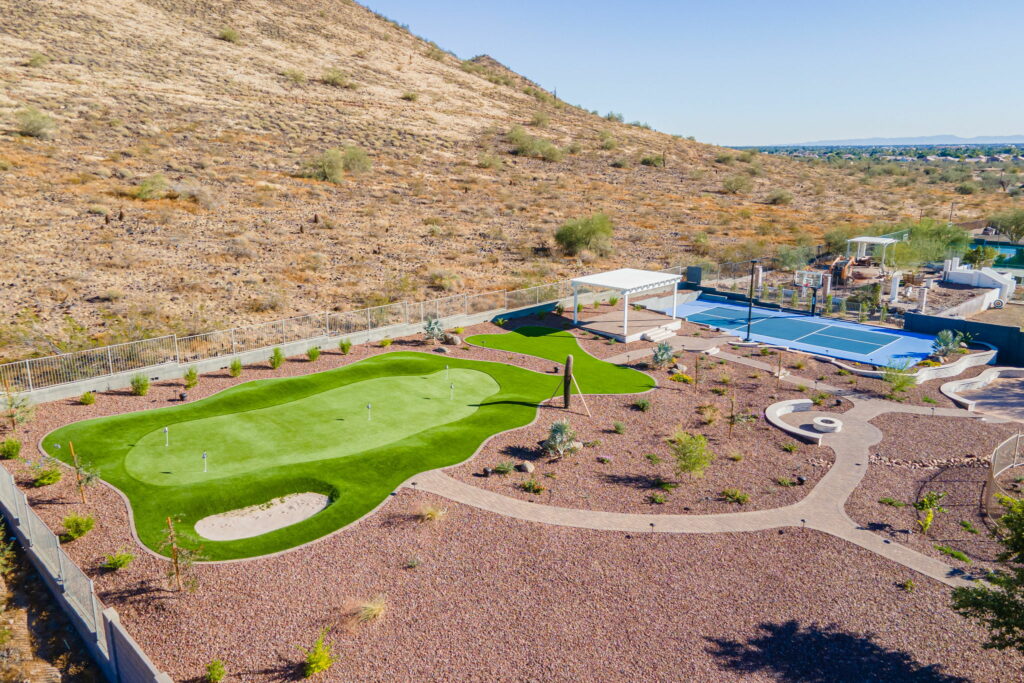
Permeable pavers are a series of interlocking plastic grids that hold gravel and other types of landscaping stone in place. They can be used for driveways, sidewalks, patios, or any other exterior area in which concrete, asphalt, or loose gravel is typically used.

The benefits of permeable pavers are that they allow water to seep through the landscaping into the ground, preventing erosion in the surrounding landscaping. This will not only keep your front yard looking great. In areas with heavy runoff, permeable paver landscaping maintains a much more consistent appearance than other options that do not accommodate for drainage.
But how does that benefit Arizona, a state with low precipitation?
While most of Arizona falls well below the national average for yearly precipitation, when storms do hit, they can be severe. According to City of Phoenix, the monsoon season runs between June 15 and September 30, and residents need to be aware of quick-hitting thunderstorms that can cause massive flooding in the area.
As the soil in Arizona is typically sun-baked, it is highly susceptible to erosion and runoff. Therefore, choosing permeable paver landscaping options can work wonders for protecting your property, while homes that use concrete or asphalt landscaping get washed away when thunderstorms do strike.
Although metal may not be the first material that comes to mind when it comes to landscaping, it is becoming a trendy product for homeowners who want sustainable, low-maintenance exteriors. It is especially strong in the arid Arizona climate, as it does not degrade in the face of sunlight like wood or plastics and will rust at a much slower rate than in more humid climates.
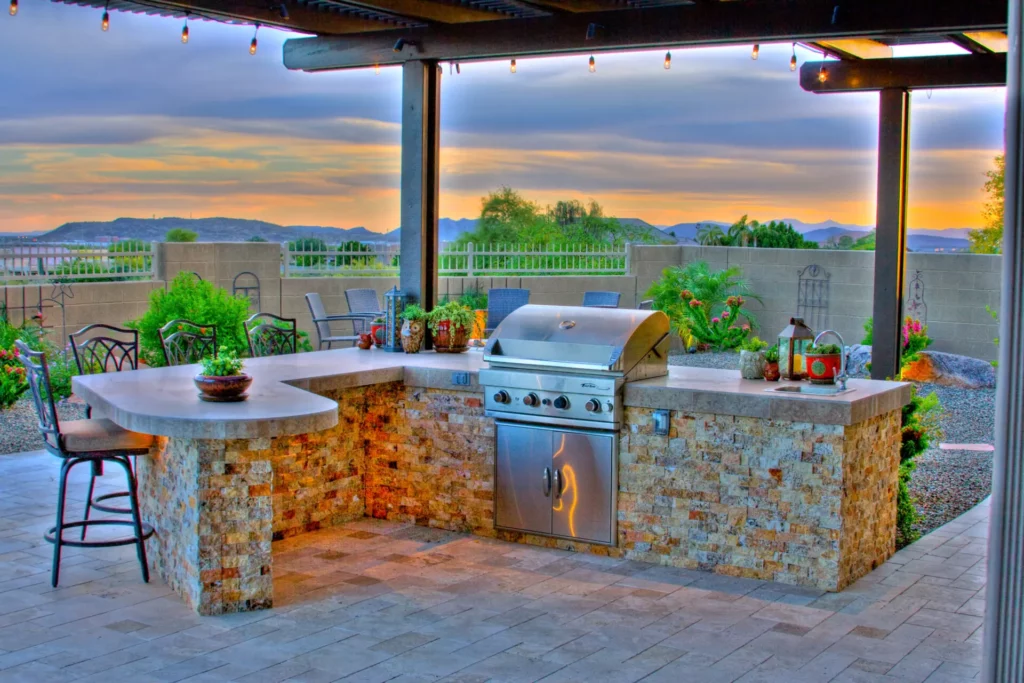
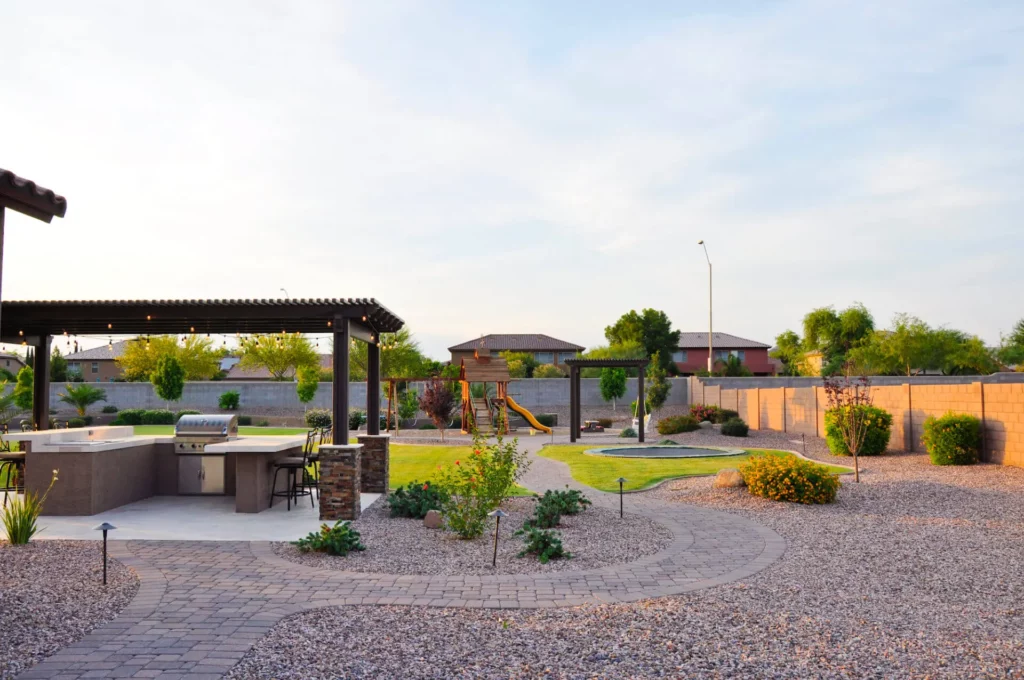
Some ways that metal is being used in Arizona landscaping is to create sharp edges and decorative barriers between walkways and lawn areas, dividing sections of the garden, in stairs and deck railing, and for patio furniture.
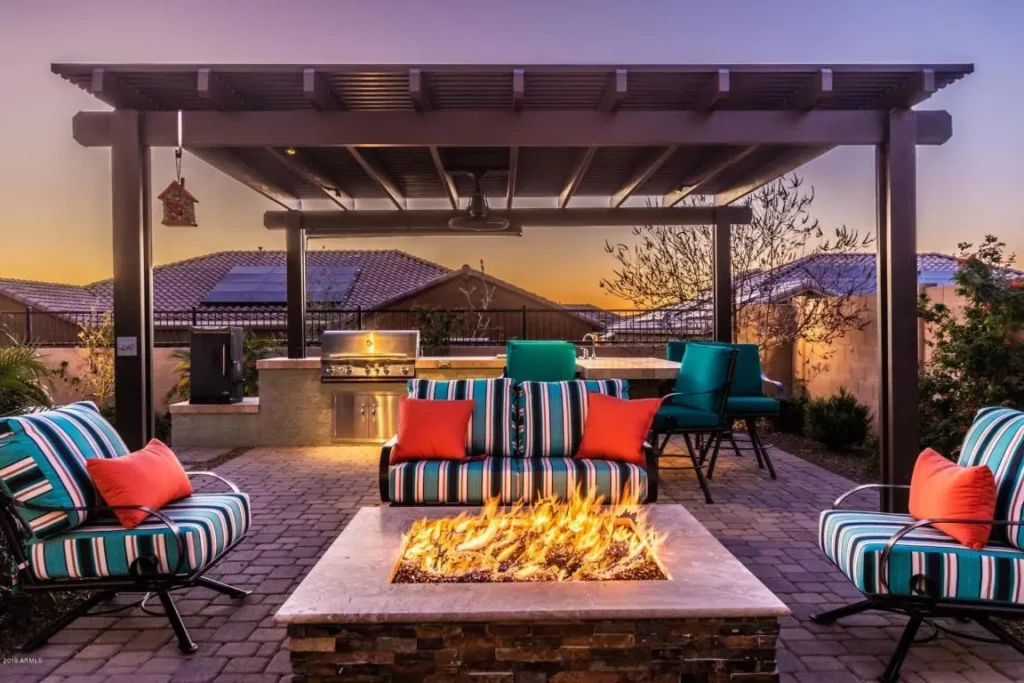
The concern with metal patio furniture in the Arizona climate is obviously the rate at which it conducts heat. While all types of metal will get warm when placed in direct sunlight, steel (especially stainless steel) and bronze are less conductive than aluminum and copper. In addition, it is a good idea to adorn metal furniture with cushioning and place it under a pergola to keep it out of direct sunlight.

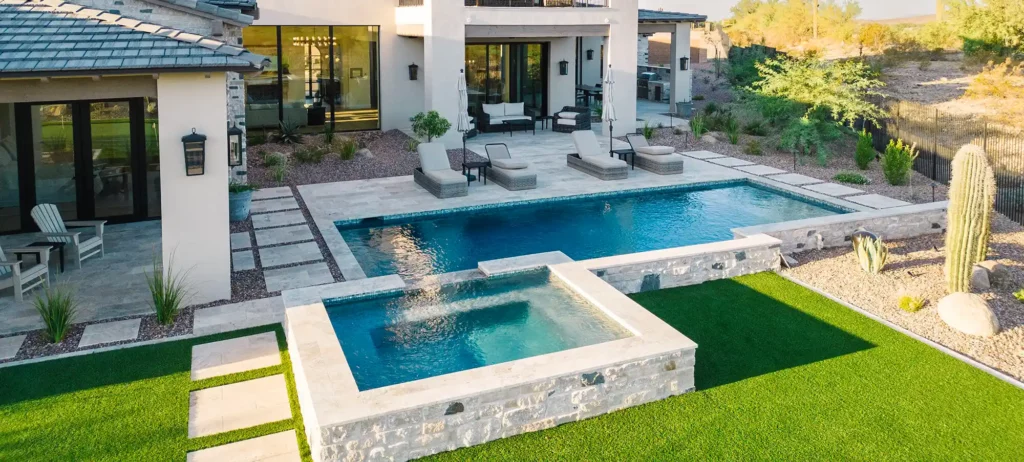
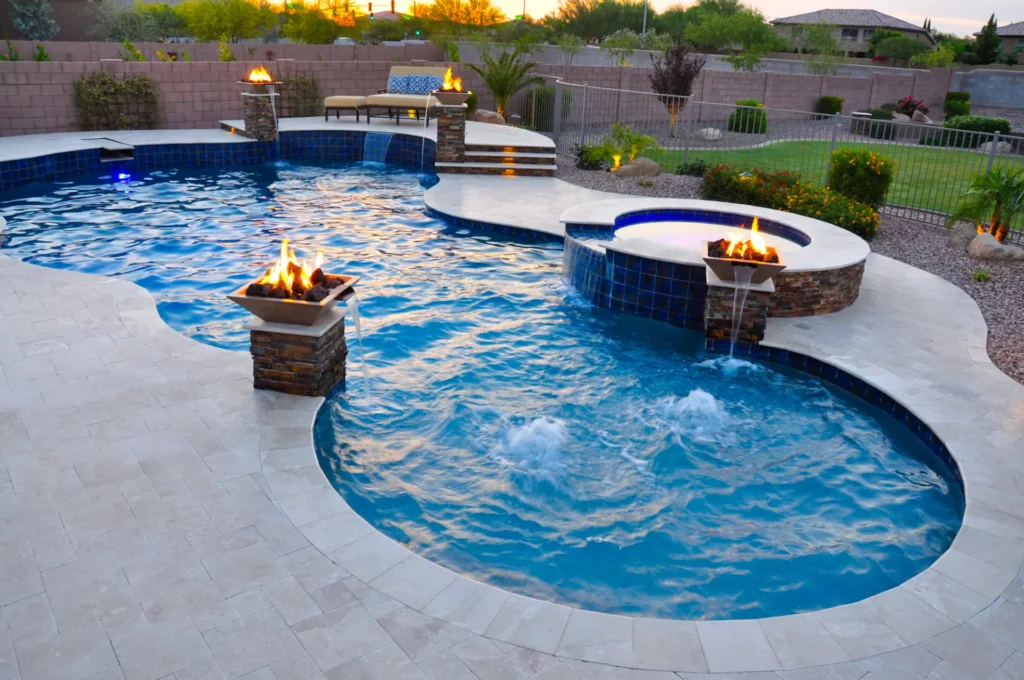
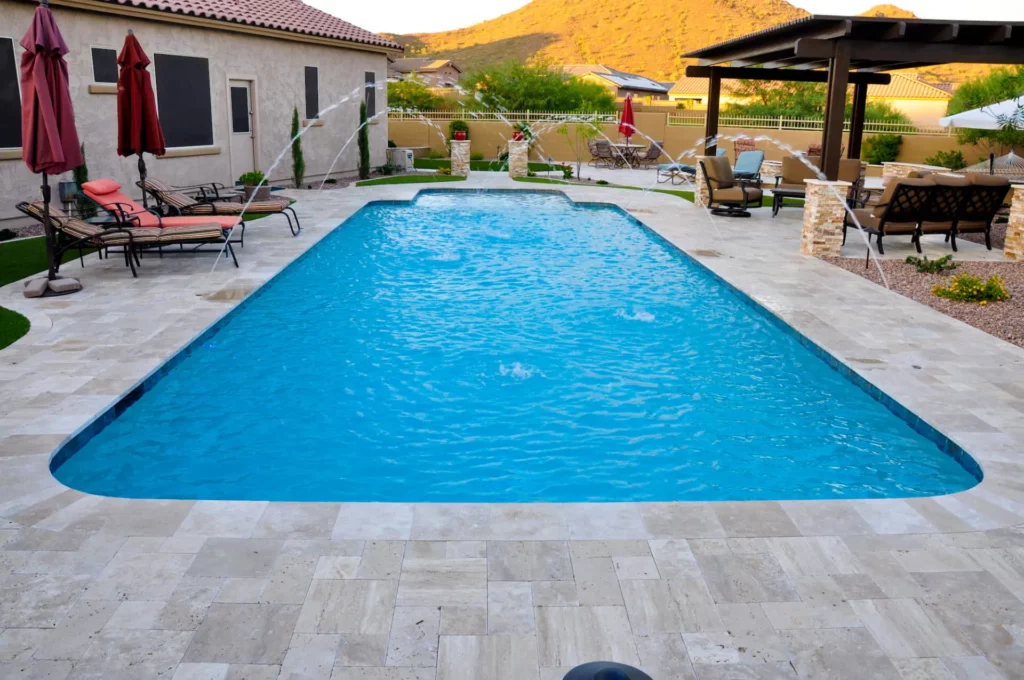
One of the benefits of living in Arizona is that it is pool season year-round. If your home has a pool, it is worthwhile to consider upgrading to ceramic decking tiles for the pool deck. Their impermeable design makes them an ideal choice in the pool area, as they are not susceptible to mildew buildup like more porous options. They can be fabricated in a wide range of designs and styles that create a far classier aspect than poured concrete and at a lower price tag than natural stone products.

However, while ceramic tiles are an ideal choice for pool decks, they make a great landscaping choice for other types of landscaping projects as well. They can be used for walkways, patios, and fire pits. The glazed finish on many porcelain tiles does a tremendous job of reflecting sunlight, causing them to heat up in the Arizona sun at a much lower rate than similar types of pavers.
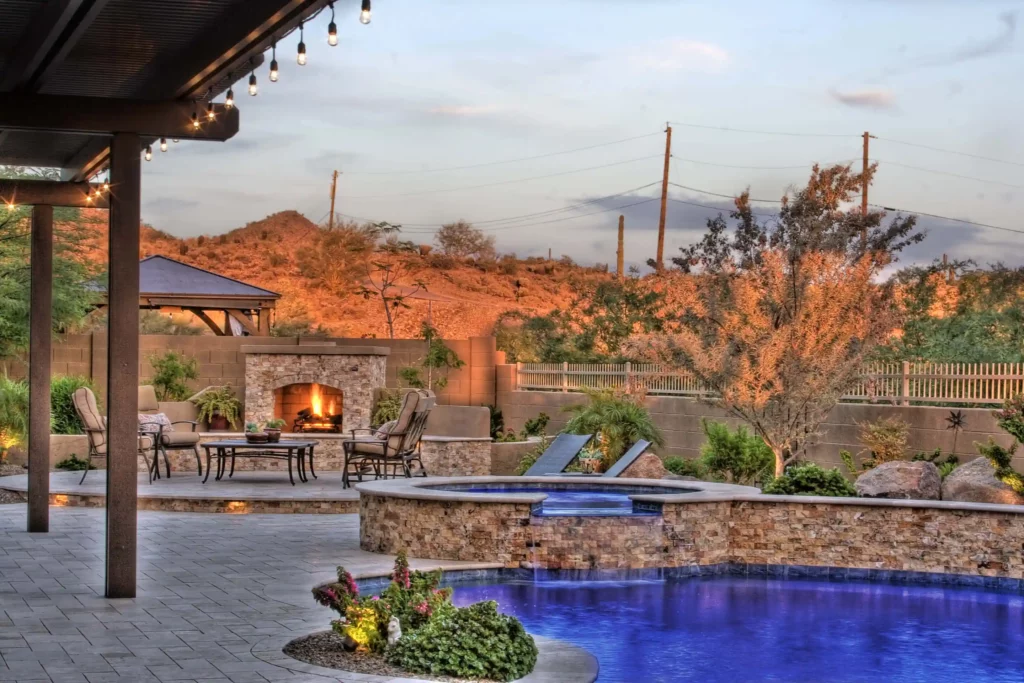
Finally, despite impressive innovations in building materials, there is something about the rustic charm of natural wood that continues to captivate homeowners’ hearts. It is still widely used by Arizona residents for decks, gazebos, pergolas, furniture, and many other types of exterior landscaping.

Among the various types of wood common to landscaping projects include:
Building on this last point, the increased incidence of wildfires is something that homeowners must take into account when using wood for landscaping projects. While the beauty is undeniable, it does present an added risk–one that insurance companies are sure to factor into premiums.


"The primary source of our business has been organic referrals — from the neighbors and friends of our customers who see the quality."
Start by asking for a quote, then we'll coordinate a time to meet at your property.